FW Fenwalk Parks Boardwalks over wet ground
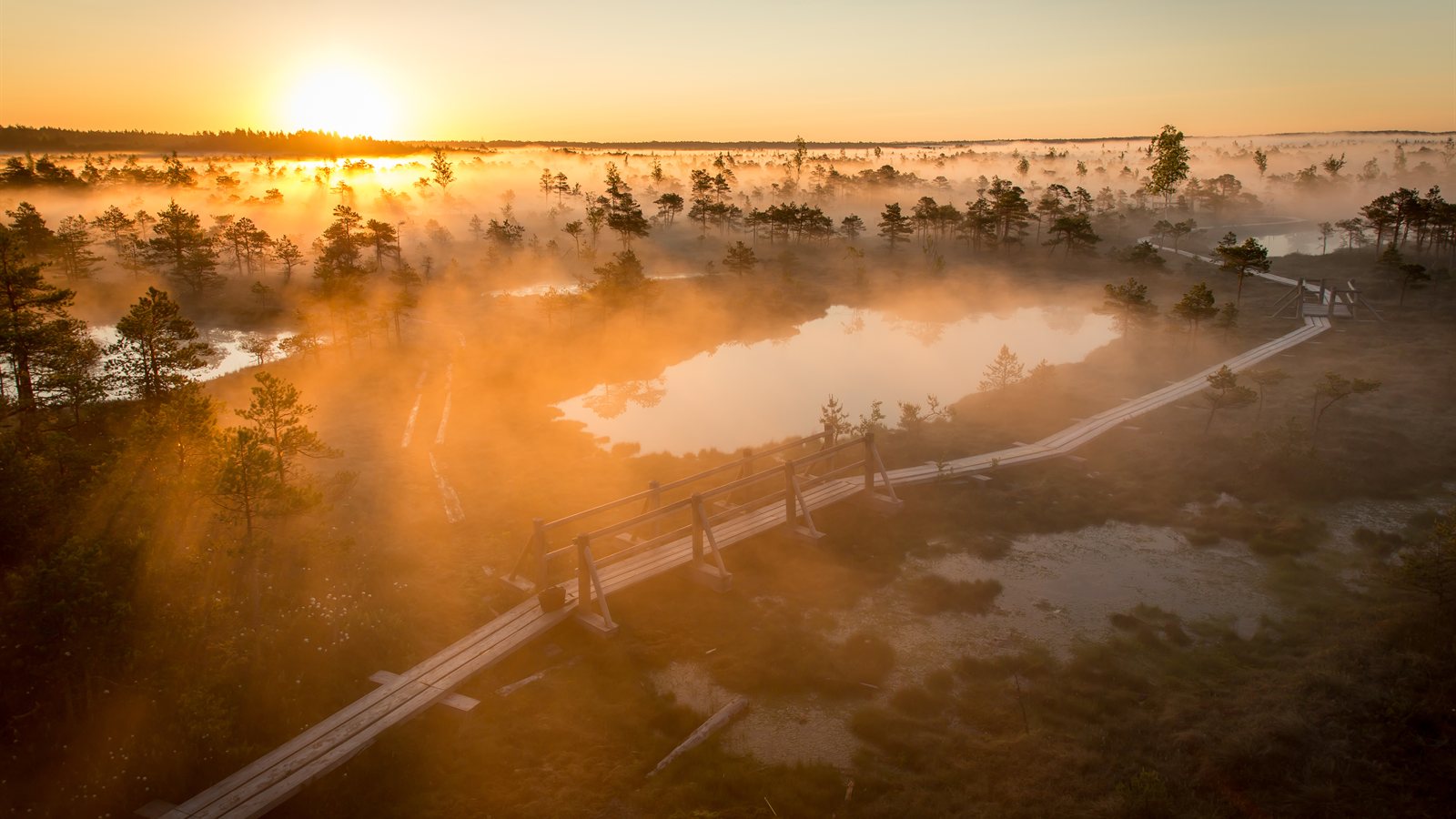
Boardwalk crossing a misty bog at sunrise with scattered pools

Peat · Pools · Plank paths

Wetland Parks Built Around Boardwalks

We design, build and run nature parks in places most visitors could never otherwise enter: raised bogs, quaking fens, alder swamp and reed marsh. Timber walkways carry people a metre above the peat without compacting it, looping past bog pools, sundew beds and cotton grass to observation towers with a view across the whole basin. Routes range from a firm eight-hundred-metre circuit suitable for wheelchairs and pushchairs to a nine-kilometre traverse with a bathing platform at the halfway point. Entry includes a map, a species list for the season and a warm room at the gate.

About us

Carpenters, Ecologists and a Great Deal of Timber

The organisation began with a single kilometre of rotting plank path across a bog that the local council was ready to close on safety grounds. A carpenter, a peatland ecologist and a group of neighbours rebuilt it over two winters using untreated larch on floating bearers, and visitor numbers tripled within a season. Since then we have restored or built walkways in a dozen wetlands, always with the same principle: the structure must carry people without draining, compacting or fragmenting the habitat it crosses.

Peatland is unforgiving of shortcuts. Foundations that penetrate the peat cause drainage lines that dry a bog for decades, so our boardwalks float on wide bearers laid directly on the surface and are re-levelled each spring as the ground breathes. Timber is untreated and locally sawn, fixings are stainless, and every section is designed to be lifted out by two people. Handrails appear only where they are needed, because a rail across an open bog spoils exactly the view people came for.

The parks are managed as habitat first and visitor attraction second. We block old drainage ditches, remove invading birch by hand, monitor water tables with dipwells, and count breeding waders, dragonflies and bog plants each year with volunteers. Results are published, including the years when numbers fall. Entry charges, where they exist, are modest and go directly into restoration and the timber budget.

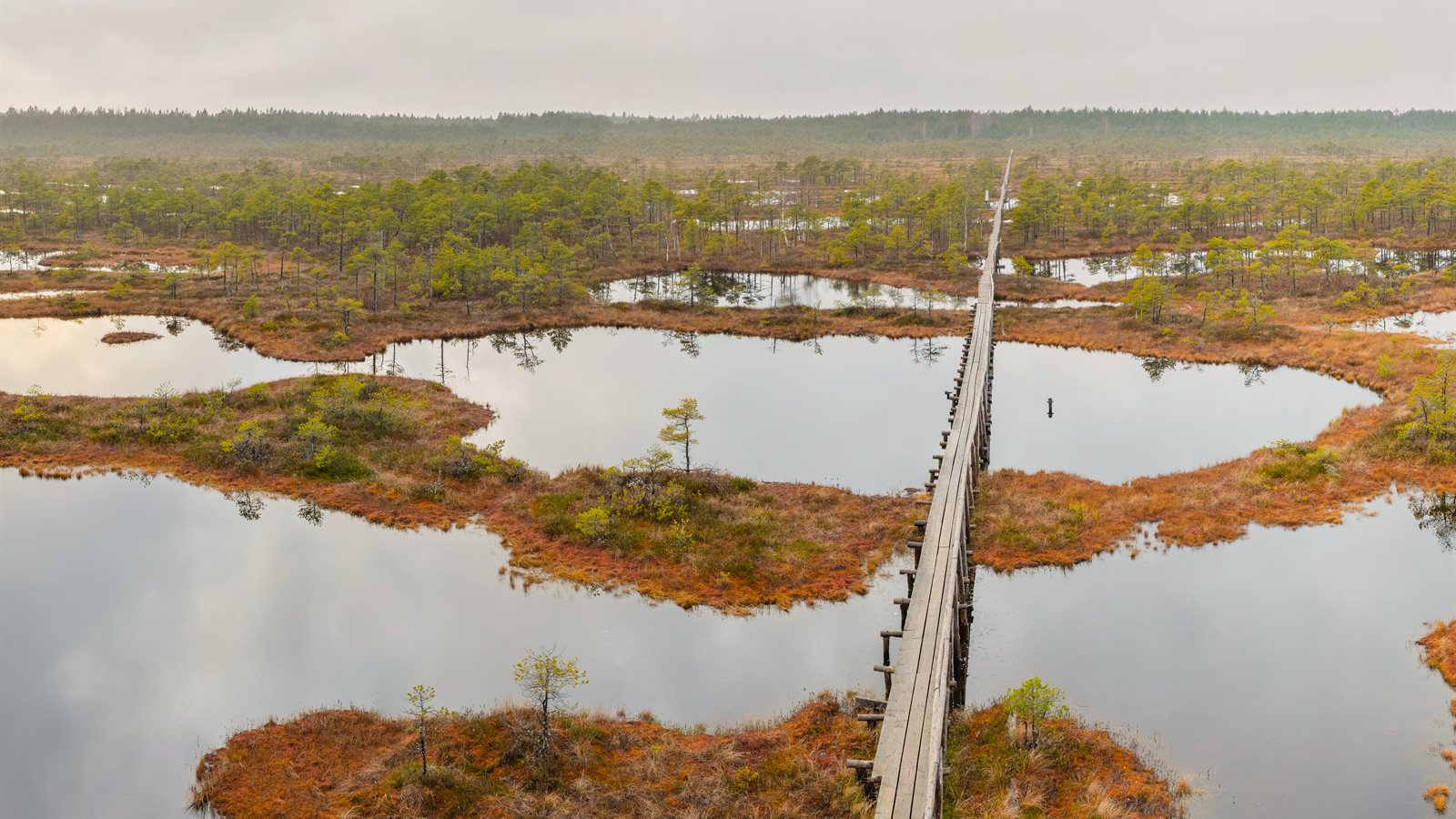
Aerial view of a long boardwalk crossing a pool-covered raised bog
Cotton grass heads catching the light on open moorland

Advantages

What Visitors and Landowners Get

Six things that separate a well-run wetland park from a muddy path with a sign at the entrance.

Access Without Damage

A bog surface takes years to recover from a single season of trampling, and the paths people create when there is no route are the ones that drain it. A well-placed boardwalk concentrates thousands of visitors onto a strip a metre wide, keeps them dry, and leaves the rest of the basin untouched. Our structures float rather than pile, so no drainage line is created underneath them, and sections can be moved if the ground shifts or a sensitive area needs to be closed. Monitoring at three of our sites shows sphagnum recovering alongside the path within four years of the old desire lines being closed.

Routes for Every Pair of Legs

Every park has at least one fully accessible circuit: level boarding, passing places wide enough for two wheelchairs, gentle gradients, benches every two hundred metres and a firm surface from the car park to the first viewpoint. Longer routes branch off for those who want distance, with honest signage about length, surface and whether handrails are present. Mobility scooters and all-terrain wheelchairs can be borrowed free at two sites. Families with pushchairs, older visitors and people with limited stamina make up a large share of our attendance precisely because the information is accurate.

Towers That Change the View

Bog is a landscape best understood from above, where the pattern of pools, hummocks and lawns suddenly makes sense. Each park has at least one timber tower, ten to fifteen metres high, with a broad platform, seating, an interpretation panel identifying what is visible in each direction and a roof that makes it usable in rain. Towers are positioned away from nesting areas and designed so that the climb is possible for anyone reasonably mobile, with a resting landing halfway. At dawn and dusk they are the best place in the park, and they are never locked.

Interpretation Without Clutter

Nothing spoils an open landscape faster than a sign every fifty metres. We use a small number of well-made panels at genuine decision points, a printed guide available at the gate, and a numbered post system tied to a short leaflet, so the information is available without being imposed on the view. Content is written by the ecologists who do the monitoring and updated when the facts change. Children get a separate trail with tasks rather than a cartoon character, and everything is produced in at least three languages at sites with international visitors.

Maintenance That Never Stops

Timber over water needs constant attention, and a neglected boardwalk becomes dangerous within a few seasons. Our teams inspect every section twice a year, replace individual boards rather than waiting for whole spans to fail, re-level bearers as the peat moves, apply anti-slip mesh in shaded areas and clear vegetation from the edges. Each park has a maintenance log open to public inspection and an annual budget ring-fenced for timber. Closures for repair are announced in advance with an alternative route, and no section stays shut longer than the work genuinely requires.

Restoration You Can Watch Happening

Visitors walk past dammed ditches, cut birch stacked for removal, dipwells with their measurements posted beside them and areas fenced for grazing trials. Each intervention has a small panel explaining what is being attempted and how it will be judged, including the ones that have not worked. People who see restoration as an ongoing, uncertain, physical activity tend to support it far more than those who are shown a finished picture. Volunteer days run monthly at every park, and school groups take part in real monitoring rather than a simulation of it.

Services

Visiting, Learning and Building

For visitors, for schools and for landowners who need a walkway designed and built across their own wet ground.

Timber watching tower above a valley at golden hour

Daily Park Access

All parks open daily from dawn until dusk, year-round. Entry includes the full boardwalk network, towers, hides, a printed map, seasonal species list, toilets and a heated shelter with hot drinks at the main gate. Parking is free, bicycle racks are covered, and the nearest bus stop is signed from the entrance. Boots are unnecessary on the boarded routes even in midwinter, which surprises most first-time visitors. Annual passes cost less than four single visits and include priority booking for guided walks and courses.

Guided Walks and Night Sessions

Ecologist-led walks run several times a week and cover bog formation, carnivorous plants, dragonflies, breeding waders and the mechanics of restoration. Evening sessions listen for nightjar and drumming snipe, and midsummer nights on the tower attract people who simply want to watch the light move across the pools. Groups are capped at twelve, all walks stay on boarded routes, and hot drinks are included. Winter walks explore frozen pools and animal tracks, and are among the most popular dates in the whole programme.

School and Family Programmes

Structured sessions for every school age, from pond dipping and sphagnum squeezing for the youngest to water-table measurement, carbon storage and habitat survey work for older students. All equipment is provided, teachers receive preparation packs and risk assessments, and indoor space is available for wet days. Family activities run through the holidays: bug hunts, den building on the woodland edge, sketching from the tower and a summer festival with music and food. Local schools visit free of charge; others pay a small per-head fee.

Boardwalk Design and Construction

We design and build walkways for landowners, councils, reserves and estates: survey of ground conditions, route design around sensitive areas, drawings and permissions, construction with floating bearers and untreated local timber, plus handover with a maintenance schedule. Structures are specified for the actual load and climate rather than a catalogue standard, and we work in winter where nesting seasons demand it. Every project includes training for the site's own staff so that routine repairs can be done locally rather than waiting for a contractor.

Restoration and Monitoring Contracts

Beyond visitor infrastructure, our field teams carry out ditch blocking, bund construction, birch and pine removal, sphagnum reintroduction, dipwell installation and long-term water-table monitoring. Work is costed transparently, carried out by hand where machinery would damage the surface, and reported with before-and-after data rather than photographs alone. We also prepare baseline surveys and monitoring plans for landowners applying for peatland funding, and we will say plainly when a site is not a realistic candidate.

Volunteering and Corporate Days

Monthly volunteer days at every park cover boardwalk repair, birch pulling, ditch damming, seed collection and survey work, with tools, training, gloves and lunch provided and no experience required. Companies can book a full day for teams of up to twenty, combining genuine practical work with a guided walk and a talk on what the site is trying to achieve. These days pay for materials rather than generating profit, and the work completed is recorded with the group's name in the park's maintenance log.
Contacts

Visits, Bookings and Project Enquiries

Ask us which park suits your group, whether the accessible circuit is open, what is flowering or breeding this week, and where to park a minibus. Guided walks, school sessions, courses and volunteer days are all booked through this office.

Landowners and councils considering a boardwalk or a restoration project should send the location and a rough description; we will arrange a site visit and an honest assessment before any quotation.

Office14 Rue Saint-Antoine, 75004 Paris, France
Phone+33 1 44 61 27 85
Parks & OfficeParks open daily dawn–dusk; office 09:00–17:00