Stiltwater Cabins Houses on piles · Channel tours

Still water · Deep shade · Slow days

Cabins on Piles and Tours Through the Backwater Bays

Our cabins stand on hardwood piles a metre above the water, reached by a plank walkway from the landing, each with its own deck, mosquito-screened veranda, hammock and a ladder down to a swimming platform. From the same landing, flat-bottomed boats leave several times a day into the bays and channels behind the cabins: cypress stands with knees breaking the surface, mangrove tunnels barely wider than the hull, floating grass mats where herons stalk, and open lagoons that turn copper at sunset. Guides are from the villages here, and the last trip of the day goes out after dark.

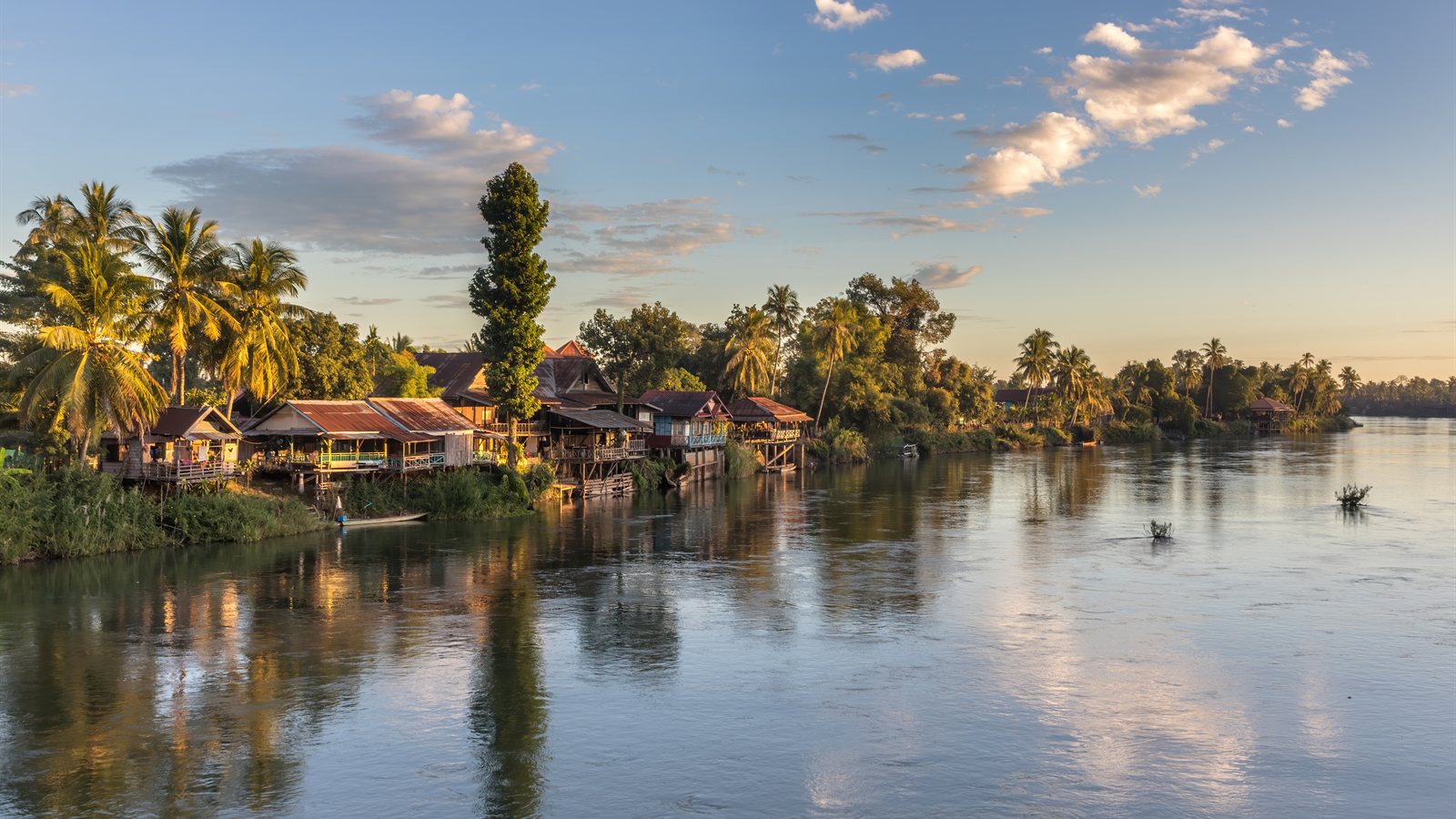
Stilt houses among palms along a wide river at golden hour
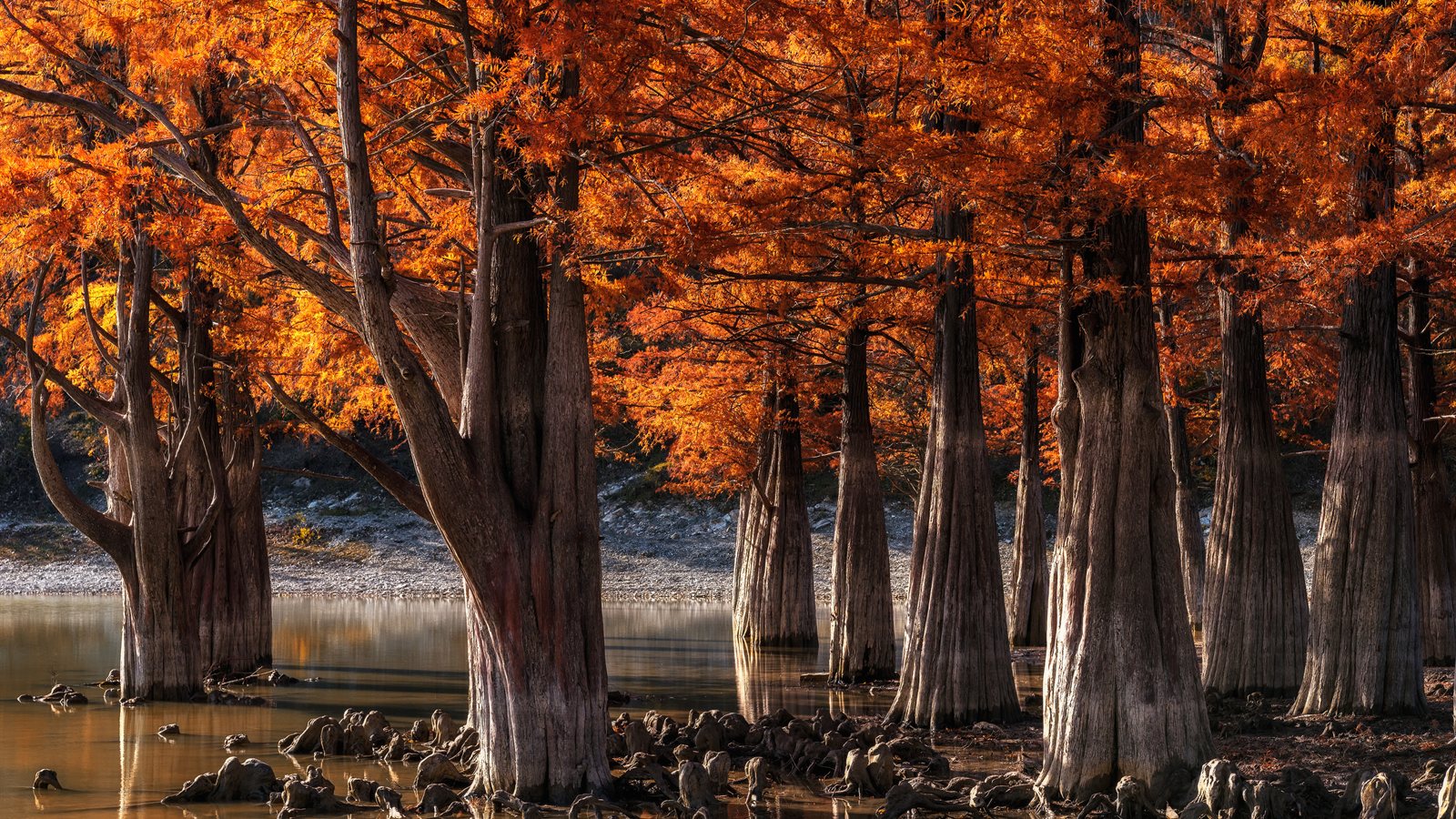
Swamp cypresses in autumn colour standing in still water

About us

Built Above the Water, Run by the People Who Live On It

Everything here was built by families who have fished and trapped these channels for generations, using the same construction their own houses use: hardwood piles driven deep into the mud, floors set above the highest recorded flood, roofs pitched steeply for the rain, and screened verandas that make evenings outdoors possible. Nothing is imported that could be made locally, and the carpenters who built the cabins are the same people who repair them after storms.

Comfort is straightforward rather than luxurious. Each cabin has a proper bed with a mosquito net, a fan and solar-powered lighting, a cold shower with rainwater and a hot one heated by a solar tank, a simple kitchen, a hammock and a deck large enough to eat on. There is no air conditioning, no television and no road noise, because there is no road. Boats are the only way in, which is precisely why the place stays quiet.

The guiding follows the same logic. Guides grew up reading these waters and know where the channels silt up, which lagoons hold caiman, where the fishing camps stand and how far you can push a boat before the tide leaves you sitting on mud until morning. Part of every booking supports the village school and the replanting of the bank vegetation that keeps the channels from collapsing, and the fish served at the table is landed by the same families.

Advantages

Why Guests Stay Longer Than Planned

Six reasons a place with no road, no air conditioning and no signal keeps filling up months in advance.

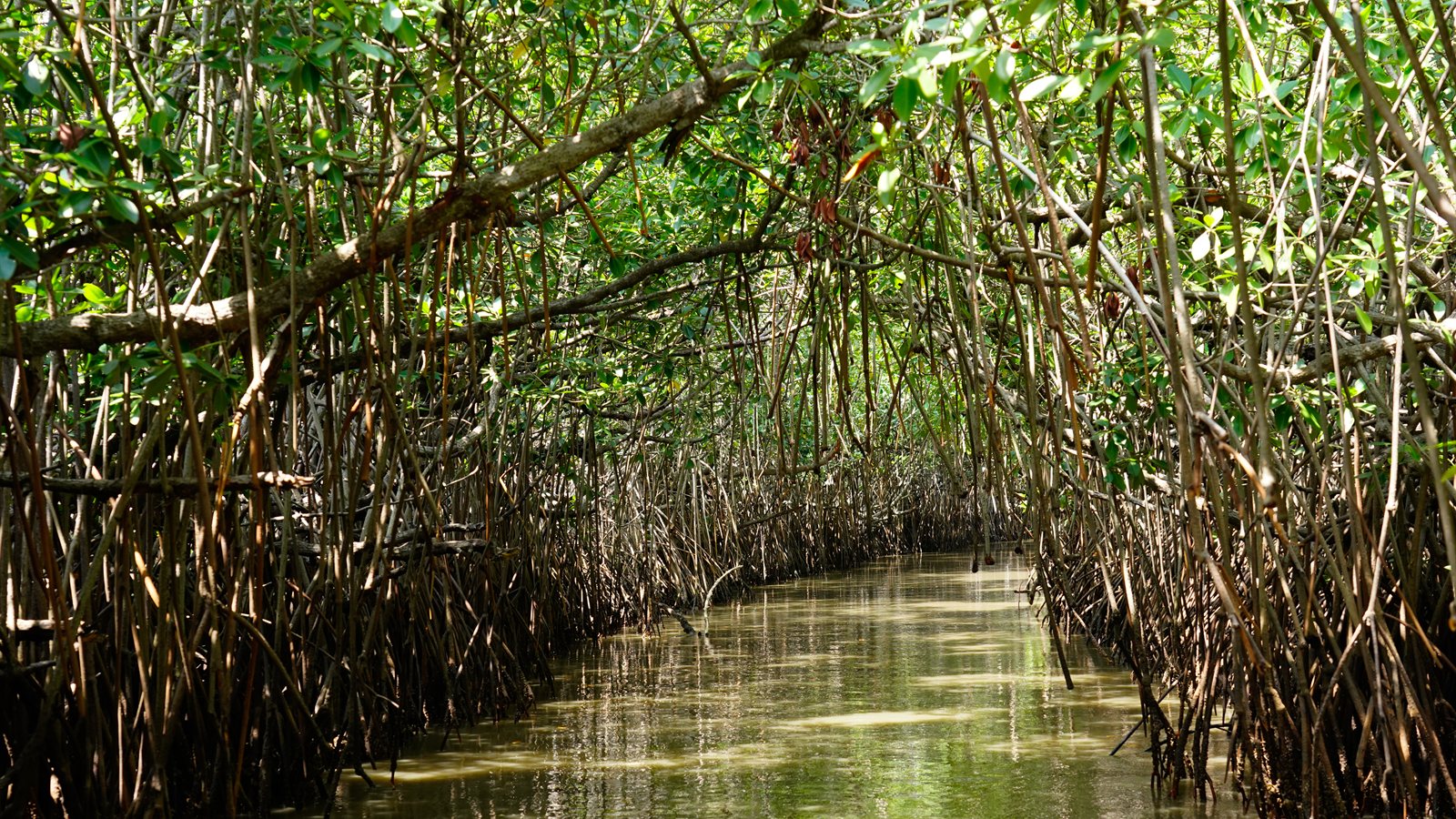
Narrow channel winding through a dense mangrove tunnel

Water on Every Side

Each cabin stands over the channel rather than beside it, which changes the whole experience of a stay. You wake to fish rising under the floorboards, watch kingfishers work the posts from the hammock, swim from your own ladder in water that is warm from the surface down, and fall asleep to frogs rather than traffic. Decks are angled so that neighbouring cabins cannot see one another, and each has its own tie-up for a boat. Guests who arrive intending to explore constantly usually spend the third day doing nothing at all, which we consider a success rather than a waste.

Guides Who Grew Up Here

Our guides learned these channels from their parents, and it shows in the small decisions: cutting the engine and poling the last two hundred metres so the herons stay put, knowing which lagoon holds caiman at dusk, reading the mud banks to judge how much water is left before the tide turns, and understanding which side of the mangrove tunnel is deep enough at this hour. They also talk honestly about how people live here — fishing, trapping, seasonal work — rather than presenting the swamp as untouched wilderness. Guests consistently rate the guiding above the cabins, which is saying something.

Insects Genuinely Managed

Nobody enjoys a swamp while being eaten alive, so this is treated as core infrastructure rather than a minor inconvenience. Every cabin is fully screened, beds carry fitted nets, verandas have a second screened layer, fans run all night because moving air keeps mosquitoes down, and repellent is supplied. We manage standing water around the landing, keep the vegetation cut back from decks, and time the evening tours to avoid the worst hour at dusk in midsummer. Long sleeves and a head net are lent to anyone who wants them, and honest advice about the season is given before booking.

Food From the Same Water

Meals are cooked in an open kitchen on the landing by two cooks from the village, using fish landed that morning, rice, beans, vegetables grown on the higher ground behind the settlement, and fruit from the trees around the cabins. Dishes are regional rather than international, portions are generous, and the recipes are shared with anyone who asks. Vegetarian and allergy requirements are handled without difficulty if flagged when booking. Breakfast is served whenever you appear, coffee is available from five in the morning, and dinner is eaten at a single long table unless you prefer a tray on your own deck.

Safety Without Fuss

Every boat carries life jackets in all sizes, a radio, a spare paddle, a bailer, a first-aid kit and a torch, and every trip is logged with a route and return time. Swimming areas are marked and checked, walkways have handrails and lighting at night, and staff hold current first-aid certification with a fast boat available at all hours for evacuation to the town clinic. Children are counted on and off boats individually. None of this is theatrical, and it never turns the stay into a series of briefings, but it is the reason we have never needed to improvise in twelve seasons.

Money That Stays in the Village

The cabins are owned collectively by the families who built them, and the guides, cooks, boat drivers and carpenters are all from the settlement rather than brought in for the season. A fixed share of income goes to the school, the clinic boat and the replanting of bank vegetation that protects the channels from erosion. We publish those figures annually. Guests are welcome to visit the school, buy directly from the women who weave the palm baskets, and join the monthly channel clean-up, but nobody is paraded as an attraction and photography of homes is asked about first.

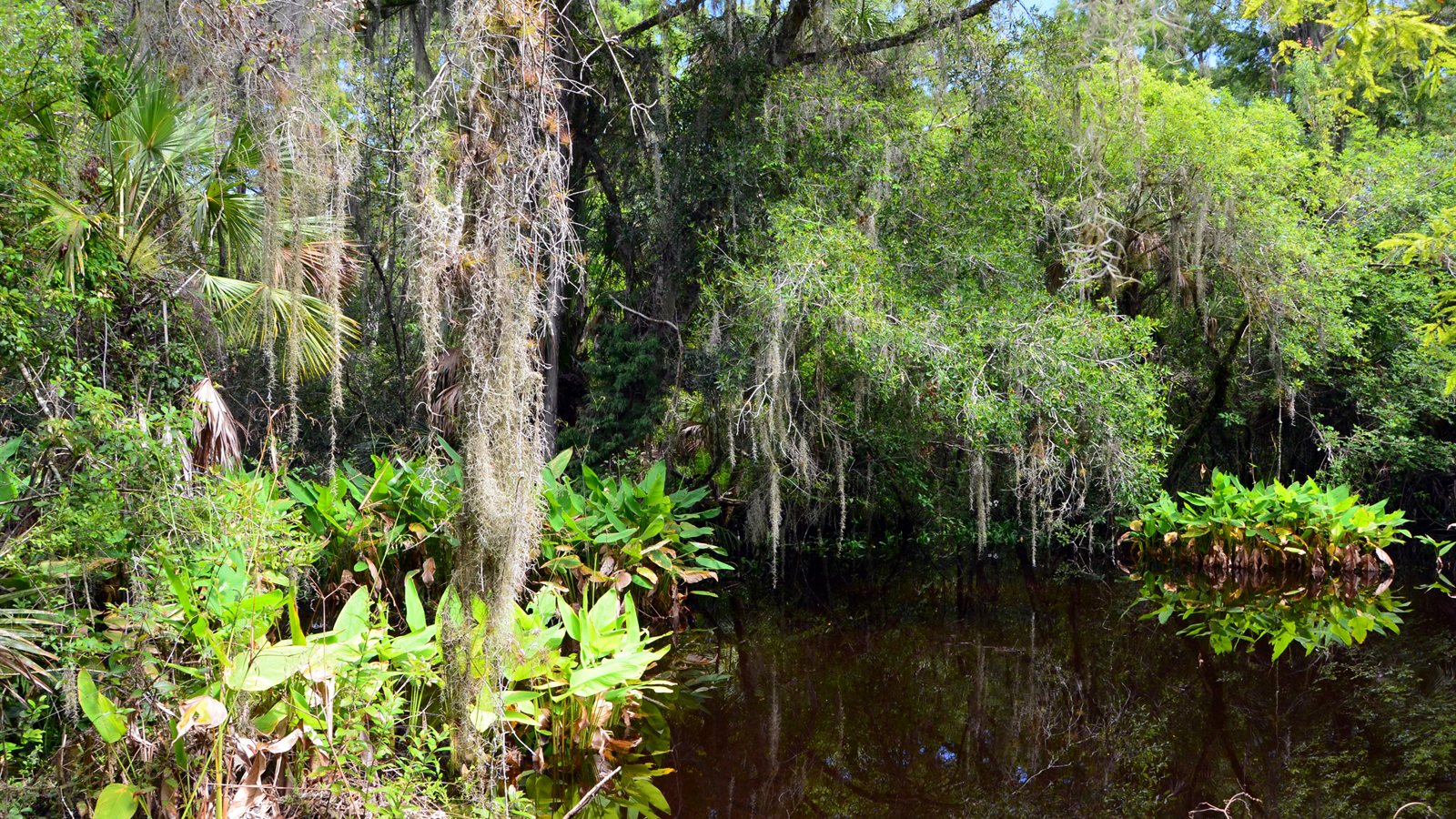
Boardwalk winding through a dense cypress swamp

Services

Stays, Tours and Longer Journeys

Six ways to use the place, from a single night on a deck to a week of channels, fishing camps and night trips.

Stilt Cabin Stays

Eight cabins sleeping two to four, each raised on piles with its own deck, screened veranda, hammock, swimming ladder and boat tie-up. Rates include all meals, drinking water, boat transfer from the town landing, and a morning or evening tour on each full day. Cabins are spaced along two hundred metres of channel so that none overlooks another, and solar power runs lights, fans and charging points through the night. Stays of three nights and longer are the most common, and the fourth night is offered at half price outside peak weeks.

Guided Channel Tours

Flat-bottomed boats leave four times daily into the bays, mangrove tunnels and cypress stands, each trip lasting two to three hours with the engine off for long stretches while the guide poles quietly. Morning departures target birds and otters, midday runs explore the widest lagoons and the abandoned fishing camps, and dusk trips look for caiman and roosting egrets. Binoculars, drinking water, rain covers and dry bags are provided. Trips are included for cabin guests and can be booked separately by visitors staying in the town.

Night Trips and Star Watching

After dark the channels become an entirely different place: frogs and insects at full volume, caiman eyes reflecting the torch beam, fishing bats working the surface and, on clear nights, a sky with no light pollution for fifty kilometres. Night tours run twice a week with a guide and a spotter, using red light rather than white to avoid disturbing wildlife, and last around ninety minutes. On moonless nights we take the boat out to the open lagoon, cut the engine and simply sit, which is consistently the trip guests describe when they get home.

Fishing With Local Boats

Half-day and full-day fishing with a village boatman, using the methods worked here for generations along with rod and line for those who prefer it. Tackle, bait, licences and refreshments are included, and the catch can be cooked at the landing that evening or released, according to species and season. Trips reach the deeper bays at dawn and the shaded channels in the afternoon heat. Beginners are taught everything from the boat, and no previous experience is expected; children fish from the landing with hand lines whenever they like.

Multi-Day Channel Expeditions

Journeys of three to six days deeper into the system, sleeping in hammocks under mosquito nets at established camps or in a second group of stilt shelters two hours upstream. A guide, a boatman and a cook travel with the group, all equipment and food are carried, and daily distances stay short enough for long stops. Expeditions cross open bays, narrow tunnels, flooded forest and grass lagoons, and usually include a night with a fishing family. Group size is capped at six, and departures run outside the highest-water months.

Photography, Research and Group Bookings

Photographers can book a boat and guide privately with pre-dawn departures, low-profile hulls, bean bags and hides positioned near roosts. Research teams and film crews receive logistical support, accommodation, boat time, local knowledge and help with permissions from the regional authority. The whole site — all eight cabins, the landing and the kitchen — can be taken for a group of up to twenty for workshops, family gatherings or retreats, with meals, tours and transfers arranged around a programme agreed in advance.
Contacts

Booking and Getting Here

Write with your dates and the number of guests, and we will confirm the cabins, arrange the boat transfer from the town landing and tell you honestly what the water level and the insects are likely to be doing that month.

Expeditions, private photography boats, research support and whole-site bookings are all arranged through the same office.

Office3 Rue de Turenne, 75003 Paris, France

Phone+33 1 42 78 55 41

Emailstiltwatercabins@live.com

SeasonOpen all year; office daily 08:00–19:00