SL Streamline Kite & Wind Tidal water · Real wind

Three knots of current · Twenty knots of wind

Kite and Windsurf Coaching on Fast-Moving Water

The stretch we teach on runs hard through a narrowing channel, which produces flat, fast water on one tide and a short steep chop on the other. Handled properly it is the best place to learn upwind riding, transitions and foiling; handled carelessly it is where people end up downwind of everything with no way back. We teach with radio helmets, a rescue boat positioned down-current, groups of two, and a briefing that explains what the water will do in the next two hours before anybody launches.

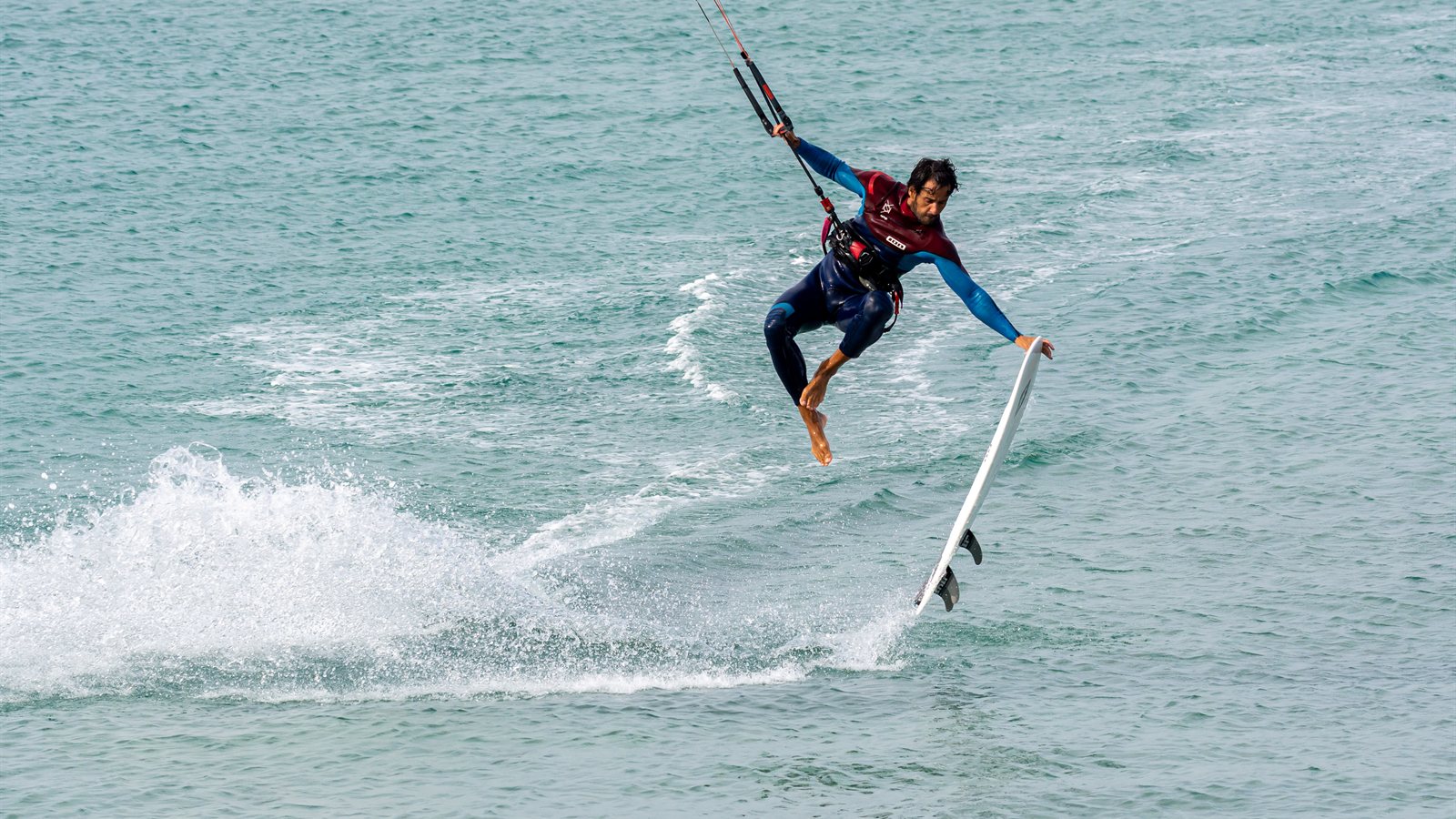
Kitesurfer riding a strapless board across choppy water
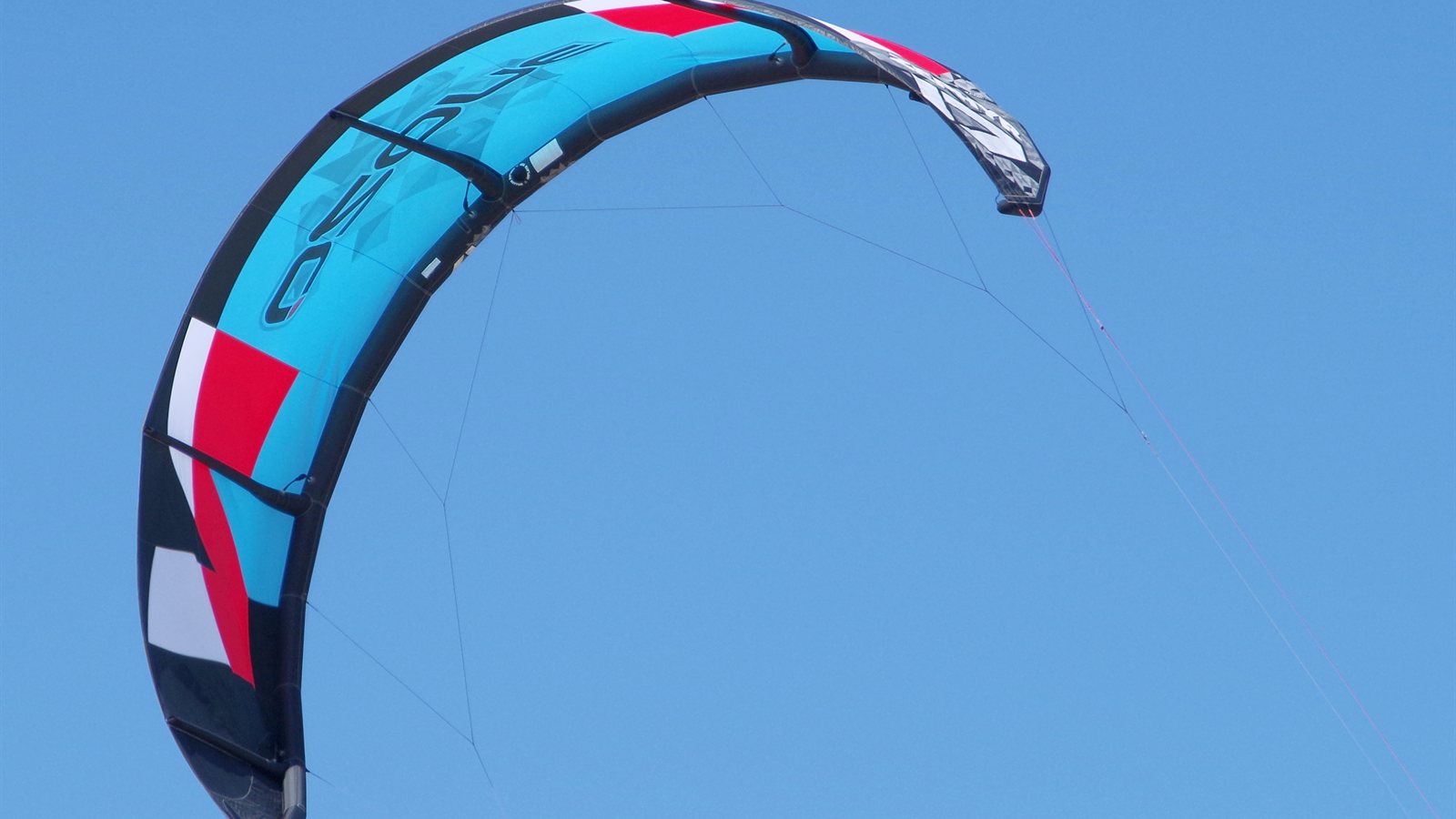
Kite arcing against a clear blue sky

About us

A School That Treats Current as a Teaching Tool

Most schools avoid moving water because it complicates everything. We chose it deliberately: a student who learns to hold position against three knots of current has solved upwind riding permanently, and one who learns to read where the flow accelerates around a bank will be safe on any coast in the world. The condition for teaching here is a safety structure that many operators are not willing to fund, which is exactly why the stretch was empty when we arrived.

That structure is simple and non-negotiable. Every session is planned against the tide table and the forecast together; students wear radio helmets from the first minute; a powered rescue boat sits down-current of the group whenever anybody is on the water; ratios never exceed two students per instructor; and there is a written go and no-go threshold for wind strength, direction and tidal flow that nobody may override, including us. Instructors hold current certification and re-qualify annually.

Beyond teaching, we publish a daily forecast and tide interpretation that any rider on this coast may use, deliver the visiting-rider briefing, maintain the launch area and its access path, and run a free self-rescue refresher every month through the season. We also organise the beach clean each spring, which usually produces a remarkable quantity of lost equipment that we return to whoever recognises it.

Advantages

Why Riders Improve Faster Here

Six things this stretch of water and this way of teaching produce.

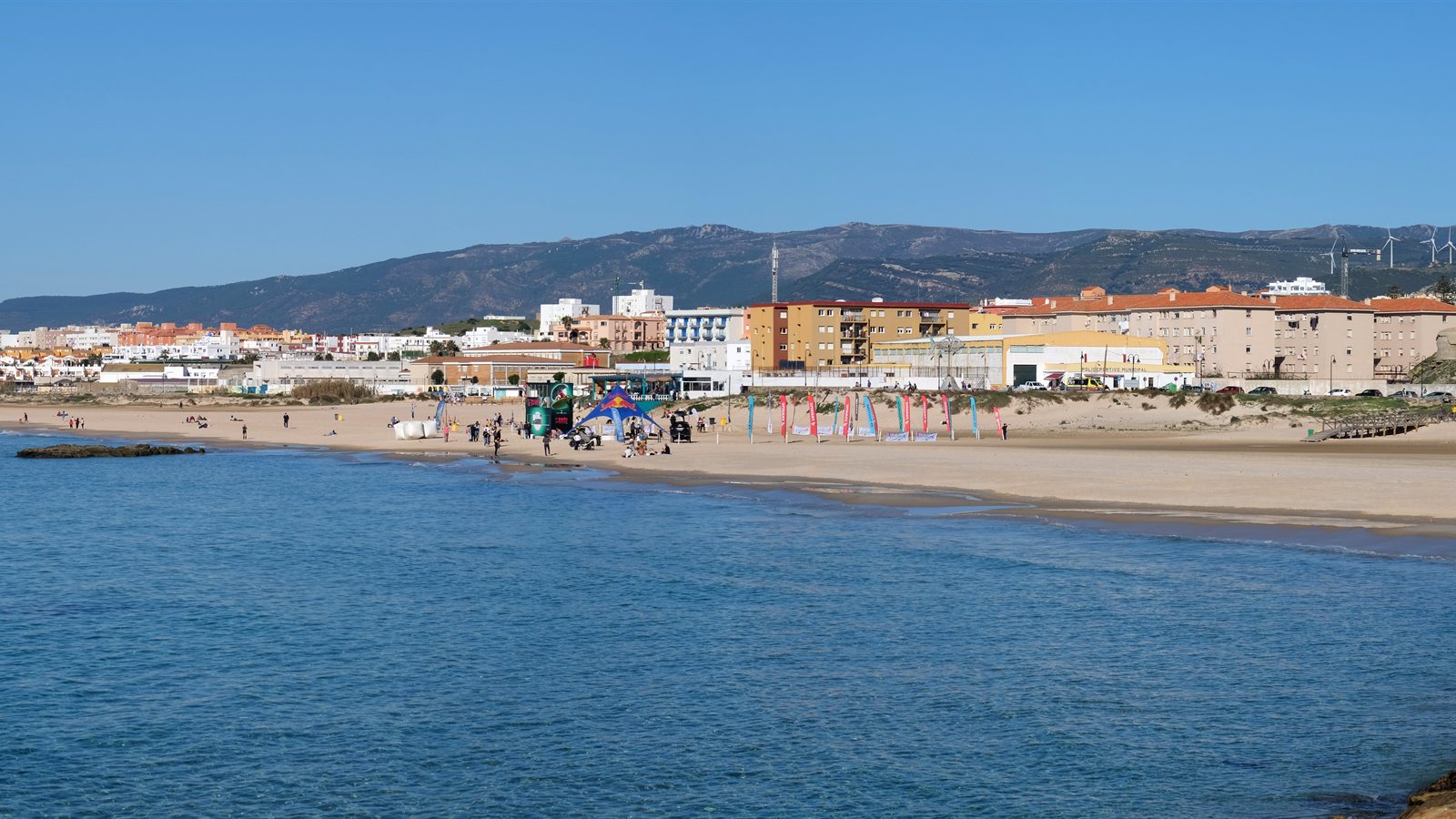
Wide beach and headland seen along a windy coast

Upwind Riding Solved Early

Current punishes sloppy edging immediately, so students learn to hold an upwind line within their first few sessions rather than after a season of drifting downwind on a lagoon. Instructors teach the theory of drift angle, apparent wind and body position from the beginning, and students practise against a fixed transit so progress is measurable rather than felt. Riders who then travel to easier spots describe them as effortless, which is the whole point of learning somewhere demanding under supervision.

Two Different Waters, One Location

With wind against tide the channel stands up into short, steep chop that teaches boat handling and timing; with wind and tide together the same water goes flat and fast and becomes ideal for foiling, transitions and speed. That means a single location can serve a beginner in the morning and an advanced rider in the afternoon of the same day, and students experience both states within a week rather than assuming that every spot behaves like the one they learned on.

Radio Coaching From the Start

Every student wears a helmet with a receiver, so corrections arrive while the mistake is happening rather than afterwards on the beach. It halves the time needed for the first water start, allows an instructor to hold two students safely, and lets a coach talk a nervous rider calmly back upwind instead of watching them drift. It also means a student who is frightened hears a steady voice rather than being alone on the water wondering whether anybody has noticed.

Rescue Boat Down-Current, Always

The boat is on the water for the whole session, not tied to the pontoon, positioned below the group so that anything that goes wrong drifts towards help rather than away from it. It carries a driver with a powerboat qualification, spare lines, a knife, a radio, tow gear and warm layers. Sessions are logged with the number of people out and the expected return, and the school holds a direct radio link with the port authority. Tired riders are collected long before they become a problem.

Honest Forecast Briefings

Every morning we publish the wind, the tide and what the two will do to each other, in plain language rather than a screenshot of a model. Bookings are moved when the combination will produce conditions above a student's level, and the reasoning is explained rather than announced. Riders who are not our customers use the same briefing, which we regard as part of running a school on a stretch of water where a bad decision has real consequences.

Equipment Kept Current

Kites, boards, foils, rigs, harnesses and impact vests are replaced every second season and maintained in the on-site workshop between sessions: lines measured and replaced, bladders and valves tested, foils checked for play, footstraps and pads renewed. Wetsuits are graded to water temperature, washed properly and sized from small to extra large. Students who are considering buying receive an honest opinion, and since we sell no equipment that opinion costs nothing to give.

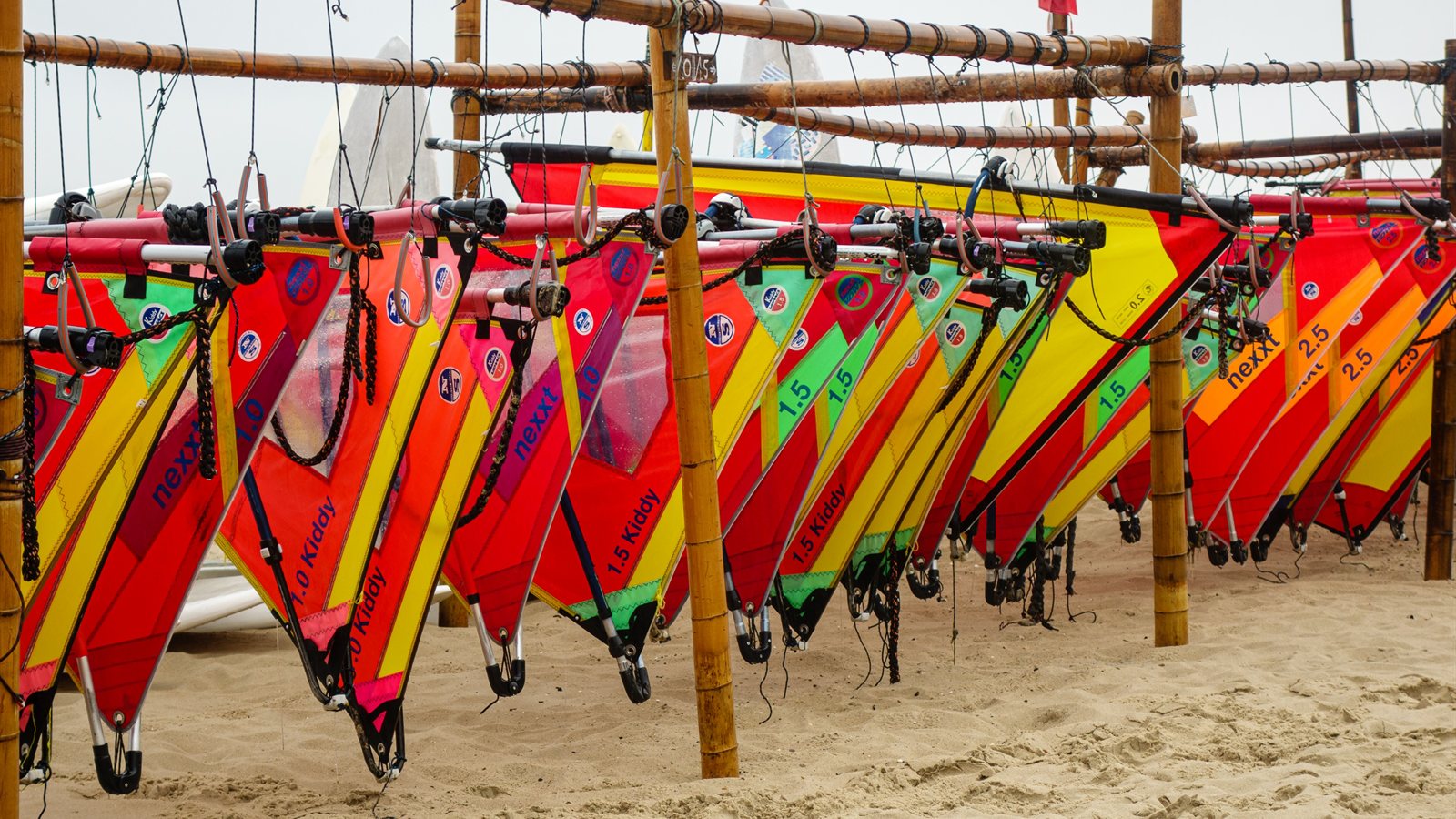
Windsurfers rigging equipment on a busy shoreline

Services

Courses, Coaching and Support

From a first day on a trainer kite to foil coaching and guided downwinders with pick-up.

Beginner Kite Courses

Nine hours across three sessions covering the wind window, trainer kite handling, safety systems, self-rescue, water relaunch, body dragging upwind and first water starts, taught two students to one instructor on the slack water either side of the tide. Radio helmets, harnesses, kites, boards, wetsuits and insurance are included. Graduates receive an internationally recognised level card and a written note of exactly what they should practise next and in what conditions.

Windsurf Courses and Clinics

Beginner courses on wide boards and small rigs in the sheltered bay, moving onto the channel as balance and steering become reliable. Clinics cover harness and footstraps, planing, beach and water starts, gybing, and rig tuning — downhaul, outhaul, boom height and mast base — which is where most riders lose speed without knowing it. Boards, rigs and wetsuits are matched to weight and conditions, and video review runs after each session.

Foil Coaching

Dedicated foil sessions on the flat, fast water that appears when wind and tide run together, from first taxiing runs through controlled flight to transitions. Equipment is provided in several sizes, and coaching is one-to-one because foiling punishes a distracted instructor. Sessions include a full safety briefing on the specific risks of foils, and helmets and impact vests are compulsory. Riders bringing their own equipment receive a setup check before they launch.

Guided Downwinders

Twelve- to eighteen-kilometre runs with the tide and the wind behind, accompanied by the boat and finished with a road transfer back to the start. Suitable for riders who can stay upwind reliably and want distance, scenery and a genuine sense of travel. Groups are capped at six, all equipment can be hired, and the route is chosen on the day. This is the session that regulars book first when the forecast lines up.

Hire, Storage and Workshop

Kites, boards, foils, rigs, harnesses and wetsuits hired by the hour, day or week after a short check of qualifications and recent experience, with a spot briefing on current and hazards included. Season storage is available in a locked, ventilated container with rinse hose, drying rails and a repair bench, and the workshop handles line replacement, bladder and valve repairs, sail stitching and foil servicing for anyone on the coast.

Camps, Groups and Safety Cover

Week-long camps combining daily sessions with theory, video review, rigging workshops and a swim-safety module, with accommodation arranged nearby. We run youth camps from age twelve with higher supervision, sessions for clubs and companies, and instructor training. Our boats and crews also provide water safety for open-water swims, regattas and charity events, and we deliver the visiting-rider briefing for this stretch free of charge.
Contacts

Booking, Tides and Conditions

Tell us your level, your dates and what you want to achieve. We will say which tides in that week are workable, how many sessions you realistically need and whether the forecast suggests moving your plans by a day or two.

Hire, storage, camps, group bookings and event safety cover are arranged through the same office.

Office

Calle de Bailén 20, 28005 Madrid, Spain

Phone

+34 91 365 91 24

Season

March–November, base daily 09:00–19:00